

Where the tongue rests can influence jaw function, breathing, and posture. Learn why tongue position matters and what steps for evaluation and training make sense.
What to expect:
Sound familiar? Your dentist says the lower jaw is "too far back." The orthopedist sees a postural disorder. The ENT specialist criticizes mouth breathing. And the physical therapist works on your neck - but no one explains to you how all of this is connected.
A central, often overlooked link is tongue posture. Where your tongue rests at rest and during swallowing can have connections to jaw function, breathing, muscle tension, and posture - sometimes extending into more distant areas of the musculoskeletal system. Many aspects can be viewed functionally/physiologically.
The Tongue - a "Small Muscular Giant" with a Big Impact
The tongue is not a single muscle but a muscle complex made up of intrinsic and extrinsic muscles that is connected to the rest of the body via the hyoid bone (os hyoideum), the lower jaw musculature, the skull, and the cervical spine.
The tongue is connected to the lower jaw and hyoid bone via muscles such as the genioglossus, hyoglossus, and styloglossus. The hyoid bone, in turn, is attached via musculature to the jaw, larynx, sternum, and shoulder girdle. Through these muscle chains, functional connections to the neck musculature and to postural control exist.
Good to know: The tongue is one of the strongest muscle systems in the body relative to its size. It works around the clock - during swallowing, speaking, breathing, chewing, and even at rest.
What Is the "Correct" Tongue Posture?
Physiological tongue posture refers to a specific resting position and a correct swallowing pattern.
A frequently described physiological resting tongue posture is understood as:
- The tongue rests broadly and flatly against the palate, especially in the front and middle thirds
- The tip of the tongue touches roughly the area behind the upper incisors, without pressing
- The lips are loosely closed
- Breathing occurs predominantly through the nose
During swallowing, the following applies:
- The tongue does not push against or between the teeth
- The tongue tends to "suction" itself against the palate and directs the swallow backward into the throat
This position can promote stable function (including lip closure and nasal breathing) and support muscular balance in the head and neck region.
Tongue Posture and the Jaw: Form Follows Function
How the Tongue Shapes the Upper Jaw
The upper jaw (maxilla) grows within a field of tension: From the outside, the cheek and lip muscles press inward. From the inside, the tongue presses outward and upward against the palate.
When the tongue regularly rests against the palate, this can promote the three-dimensional development of the upper jaw - in width (sufficient room for all the teeth), in height (a flat, well-arched palate), and in its position within the face.
If this tongue pressure is missing - for example due to mouth breathing or an incorrect swallowing pattern - the pulling force of the cheek muscles predominates. This can promote: a narrower upper jaw, crowding, crossbite, or open bite. In addition, a high, narrow palate that "protrudes" into the nasal cavity and makes nasal breathing more difficult.
A study by Principato (1991) describes this connection: A low tongue position with mouth breathing inhibits the lateral expansion and anterior development of the maxilla (aao-hnsfjournals.onlinelibra...).
Lower Jaw Position, Bite, and Muscle Chains
The position of the lower jaw is closely linked to tongue posture. If the tongue rests predominantly low on the floor of the mouth, the lower jaw is often pulled backward and downward. If the tongue rests physiologically high against the palate, this can support a more balanced lower jaw position.
A study by Primozic et al. (2012) shows: Tongue position is significantly lower in patients with Class III malocclusion and correlates with altered jaw structures (academic.oup.com/ejo/article...).
Disturbances in this system can be accompanied by symptoms such as TMJ disorders (e.g., clicking/pain), overloading of the chewing muscles, or neck/shoulder tension.
Tongue Posture and Breathing: Nasal Breathing vs. Mouth Breathing
Why the Tongue Affects the Airways
The tongue forms the front wall of the throat. Its position helps determine how wide or narrow the airway is.
With physiological tongue posture (high against the palate), the tongue rests "forward and up," the throat space remains clear, and nasal breathing is functionally supported.
With a low tongue posture and mouth breathing, the tongue sinks backward and downward and can narrow the throat space. Especially in the supine position, this can contribute to snoring or breathing pauses (sleep apnea). If sleep apnea or daytime fatigue is suspected, medical evaluation (sleep medicine/ENT) is required.
Especially in children with mouth breathing, one often finds enlarged adenoids, a narrow upper jaw with a high palate, and a forward head posture as compensation.
Important
Chronic mouth breathing is not a "harmless habit." It affects jaw growth, oxygen supply, and sleep quality and should be evaluated early - by a pediatrician, ENT specialist, or in orthodontics.
Nasal Breathing: Filter, Humidifier, and Physiological Regulator
The nose is not a luxury but a highly specialized organ. It filters particles and germs through cilia and mucous membrane, humidifies and warms the inhaled air, and promotes the production of nitric oxide (NO).
A review by Marcuccio et al. (2023) shows: Nasal nitric oxide plays a key role in immune defense, dilates blood vessels in the lungs, and improves oxygen exchange (mdpi.com/2077-0383/12/15/5081).
When the tongue rests correctly against the palate and the lips are closed, nasal breathing becomes the simple, automatic default setting.
Tongue Posture and Posture: From the Teeth to the Feet
Hyoid Bone, Cervical Spine, and Muscle Chains
The hyoid bone (os hyoideum) is a small, freely suspended bone in the neck region. It is connected via musculature to the lower jaw (suprahyoid muscles), the larynx, and the sternum and shoulder girdle (infrahyoid muscles).
If tongue posture changes permanently, the hyoid bone must adjust its position. This can lead to compensations in the neck musculature, an influence on head posture, and possible changes in the global statics of the thoracic spine, lumbar spine, and pelvic position.
A recent study by Kerbrat et al. (2024) demonstrates: Patients with jaw misalignments show a hyperkyphosis of the lower cervical spine and a forward head posture. These postural changes correlate with facial length and mouth breathing (sciencedirect.com/science/ar...).
Akhlaghi et al. (2024) also showed: Following jaw surgery, patients’ head and neck posture changes measurably (ijoms.com/article/S0901-5027...).
Good to know
The body always tries to keep the eyes level and maintain breathing. If the jaw or tongue posture is unfavorable, it will adjust the spine if necessary to achieve this - with long-term consequences for muscles and joints.
Muscular Imbalances and Pain
A dysfunctional tongue posture can, over the years, overload the chewing musculature, place undue strain on the temporomandibular joint, and promote chronic tension in the neck musculature.
Typical symptoms are:
- Tension headaches
- Pain in the jaw and facial region
- Neck and shoulder tension
- Tinnitus or ear pressure
- Nonspecific back complaints
These complaints are often multifactorial - tongue posture, breathing, jaw position, stress, and posture reinforce one another.
Bone Metabolism: Why Function Changes Bone Shape
Bones are living tissue that constantly remodels itself. Bone metabolism is controlled by mechanical loading (pressure, tension), hormonal factors, as well as blood circulation and metabolism.
At the jaw and palate, this means: Regular tongue pressure against the palate acts like a gentle "shaper." Osteoblasts build up bone where physiological pressure is applied. This can create functional conditions that promote a broader and more stable development of the upper jaw.
Incorrect loading, on the other hand - such as lateral pressing of the tongue against individual teeth or permanent pressure from the lips and cheeks - can redirect growth and promote malocclusions.
A case study by Green (2013) documents: After correction of tongue and lip resting posture through myofunctional therapy, improvements in jaw development were described. (Int J Orofacial Myology, Vol. 39, pp. 45-53).
This principle of "form follows function" is a cornerstone of functional orthodontics and of dentosophy.
What Can You Do?
If you suspect that your tongue posture is not optimal, there are several places to turn to:
Professional evaluation:
- Dentist or orthodontist with a focus on functional therapy
- ENT specialist if obstructed nasal breathing is suspected
- Speech therapist or myofunctional therapist
Orientation questions:
The following questions can help as a starting point:
- Where is your tongue right now, at this very moment?
- Do you breathe predominantly through your nose or your mouth?
- Do you have a dry mouth in the morning?
Possible therapeutic approaches:
- Myofunctional therapy to correct tongue posture and swallowing pattern
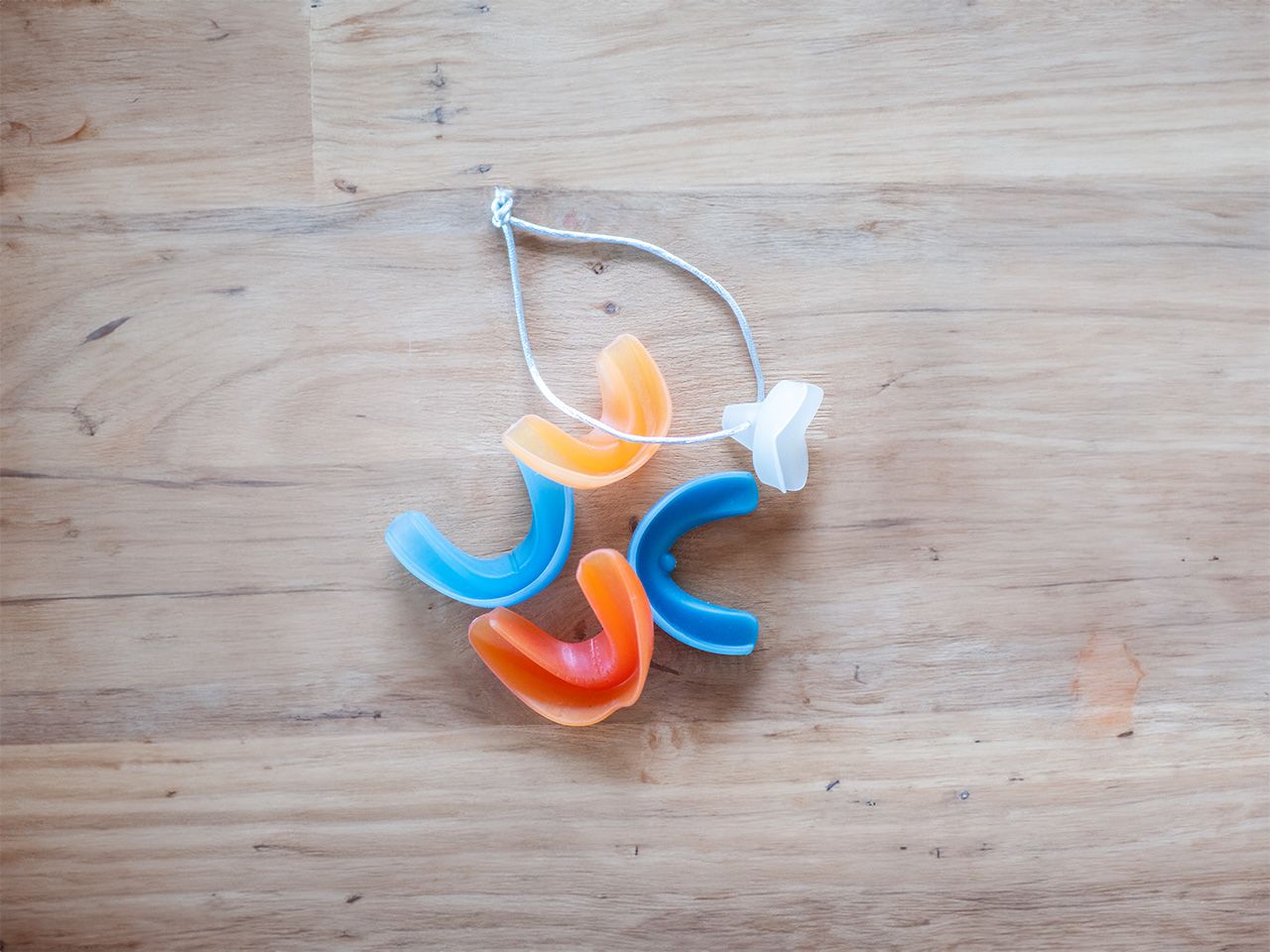
- Dentosophy with a Balancer as part of a functional concept (depending on the individual starting situation and professional guidance)
- Breathing therapy to promote nasal breathing
Conclusion
Tongue posture is much more than a detail. It influences how the jaw and face develop, how we breathe, and how our body aligns itself in space. A physiological tongue position - broad against the palate, lips closed, nasal breathing - is an important building block for a functionally coherent interplay of mouth, jaw, and body.
The good news: Even in adulthood, tongue posture can still be influenced. For complaints such as TMJ disorders, snoring, neck tension, or postural problems, a functional examination can be one building block in the evaluation.
Sources
- •Primozic J, et al. (2012). The association of tongue posture with the dentoalveolar maxillary and mandibular morphology in Class III malocclusion. Eur J Orthod. academic.oup.com/ejo/article...
- •Principato JJ (1991). Upper airway obstruction and craniofacial morphology. Otolaryngol Head Neck Surg. aao-hnsfjournals.onlinelibra...
- •Kerbrat A, et al. (2024). Specific postural alignment alterations due to long-face deformity in patients with maxillo-mandibular deformities. J Stomatol Oral Maxillofac Surg. sciencedirect.com/science/ar...
- •Akhlaghi F, et al. (2024). Changes in lateral standing posture following orthognathic surgery. Int J Oral Maxillofac Surg. ijoms.com/article/S0901-5027...
- •Marcuccio G, et al. (2023). Clinical Applications of Nasal Nitric Oxide in Allergic Rhinitis: A Review. J Clin Med. mdpi.com/2077-0383/12/15/5081
- •Green S (2013). Case history: improved maxillary growth and development following digit sucking elimination and orofacial myofunctional therapy. Int J Orofacial Myology. 39:45-53.
The content of this article is for general information and does not replace individual medical or dental advice. For questions about dentosophic approaches, a professional evaluation by an appropriately trained practitioner may be advisable.