

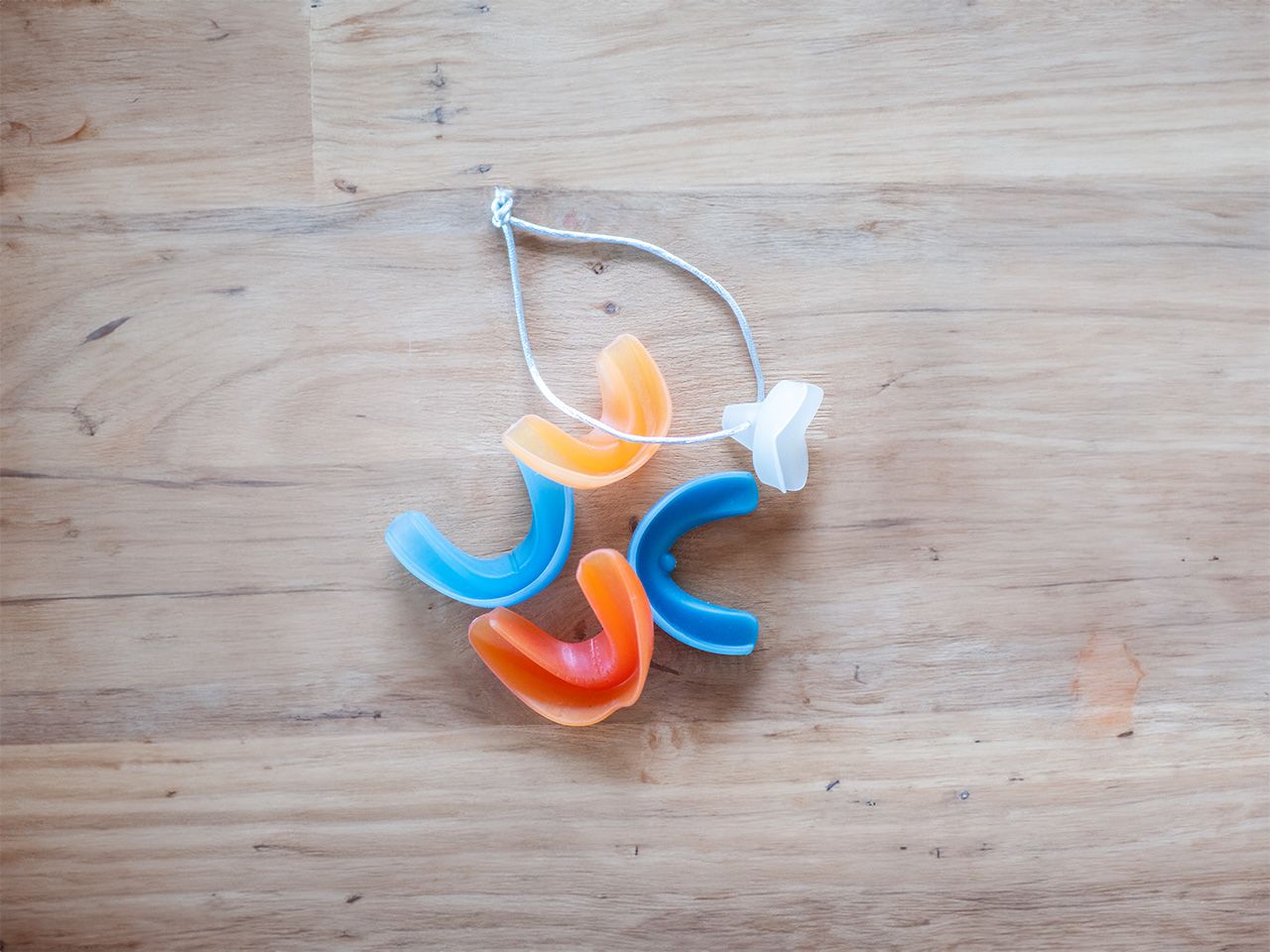
The balancer — sometimes loosely called an “activator” — is the central device of the Dentosophy approach: a soft, removable appliance aimed at functions like breathing, tongue posture, and swallowing
What to expect:
A Soft Device Instead of Fixed Braces?
Anyone who starts reading about Dentosophy quickly comes across one central tool: the balancer. Unlike fixed braces with brackets and wires, the balancer is a soft, flexible device made of elastic material that is not permanently attached to the teeth.
In this article we look at what the balancer is, how it is typically used within the Dentosophy approach, how it relates to the “activator” you may have read about elsewhere, and which questions are worth asking before starting.
What Is the Balancer?
The balancer used in Dentosophy (from the French balanceur) is a prefabricated, flexible appliance that sits loosely between the upper and lower rows of teeth. It is not glued or wired in place; it can be inserted and removed at any time.
Within the Dentosophy approach, the balancer is described as a functional re-education device: the idea is not to push individual teeth into position mechanically, but to give the muscles of the mouth, tongue, and face an impulse to work in a more balanced way — for example during swallowing, breathing, and at rest.
Balancer or “Activator” — Which Is Correct?
The two names are often mixed up in everyday language, but strictly speaking they belong to different worlds. The activator is a classic appliance from functional orthodontics: a comparatively rigid device that has been used there for around a century. The balancer of the Dentosophy approach is a different appliance — soft, elastic, and used together with functional exercises.
Because patients hear both words, some practitioners use them loosely as if they were interchangeable. When Dentosophy practitioners describe their work, they almost always mean the soft balancer. If you arrived here searching for “activator”, this is the device your search most likely referred to in the Dentosophy context.
How Is It Typically Used?
The typical routine described by practitioners combines two elements: wearing the balancer overnight while sleeping, and short, conscious exercise sessions during the day — often just a few minutes.
The daytime exercises usually focus on functions rather than teeth: nasal breathing, tongue posture, lip closure, and swallowing patterns. The balancer serves as a training reference for these functions. How long the overall process takes varies from person to person and is reviewed regularly with the practitioner.
How Does It Differ From Fixed Braces?
Fixed orthodontic appliances work primarily mechanically: they apply controlled forces to move teeth. The balancer follows a different logic — it addresses the functions surrounding the teeth, such as muscle balance, breathing, and swallowing.
The two approaches are therefore not simply interchangeable. Which path makes sense in an individual case — functional, mechanical, or a combination — depends on the findings and should be discussed openly with the practitioners involved.
Children and Adults
The balancer is used with children as well as with adults. With children, practitioners often emphasise the developmental aspect, since jaw growth is still in progress. With adults, the focus described is more on functional habits such as breathing, tongue position, and muscle tension.
At which age which approach is realistic, and what can be expected in a specific case, is an individual question — a serious initial consultation will address it honestly.
Questions Worth Asking Before You Start
If you are considering a balancer as part of a Dentosophy-oriented treatment, these questions can help structure the first conversation: What findings is the recommendation based on? What does the daily routine look like in practice? How is progress reviewed, and at what intervals? What total costs should be expected, including follow-up appointments and possible device replacements?
A first point of contact is a practitioner who has completed Dentosophy training. Our directory lists dentists and therapists with this training by location — find a practitioner near you.
This article is for general information only and is not a substitute for individual medical or dental advice, diagnosis, or treatment. Whether a functional approach is suitable in a specific case should always be assessed by a qualified practitioner.
The content of this article is for general information and does not replace individual medical or dental advice. For questions about dentosophic approaches, a professional evaluation by an appropriately trained practitioner may be advisable.