

Headaches can be connected to the jaw joint. Breathing, tongue posture, and body posture all play a role. Learn what may be behind the symptoms.
What to expect:
A pressing pain at the temples, a feeling of tension in the neck, migraine-like symptoms with no identifiable cause – what many people do not know: one possible cause can lie in the jaw joint and the function of the entire chewing system.
This can be explained in functional-physiological terms. A complex interplay of bones, muscles, and nerves connects the jaw with the head, neck, and body posture. A disturbance in this system can affect neighboring structures.
How the jaw joint and headaches can be connected
The jaw joint (temporomandibular joint) is one of the most complex joints in the body. It allows not only opening and closing but also gliding and sideways movements. In doing so, it is in direct connection with the cervical spine and the base of the skull.
Three possible mechanisms:
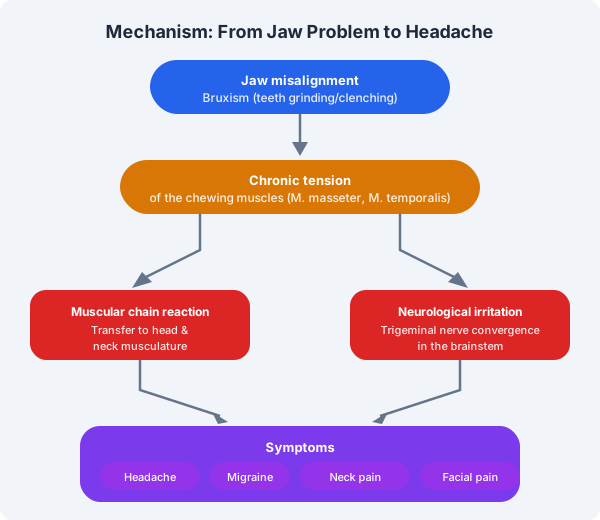
Muscular chain reaction: The chewing muscles are among the strongest muscles in the body. In the case of dysfunction – for example through nighttime clenching – they can become chronically tense. Since they attach to the top of the skull, this tension can contribute to headaches.
Neurological connection: The trigeminal nerve supplies the face and chewing musculature. Its nuclear complex in the brainstem is in contact with nerve nuclei for the neck musculature and pain perception. Irritations in the jaw region can be perceived as a headache.
Postural connection: The position of the lower jaw influences head posture via muscle chains. An unfavorable jaw position can contribute to a forward displacement of the head – with possible strain on the neck and vertebral joints.
Often overlooked: the role of breathing, tongue posture, and swallowing
Tooth position is only part of the picture. Three functional patterns influence the jaw joint every day:
Breathing: With chronic mouth breathing, the tongue posture often changes – the tongue no longer rests against the palate. This can affect head posture and the strain on the chewing musculature.
Tongue posture: At rest, the tongue often lies gently against the palate. This can stabilize the upper jaw and relieve the chewing musculature. If the tongue rests low permanently, this effect is missing.
Swallowing: During physiological swallowing, the tongue presses against the palate. A deviant swallowing pattern can exert different forces on the teeth and jaw over the years.
These functional patterns can influence the jaw position in the long term – because bone adapts to the forces acting upon it (Wolff's law).
Possible signs of a connection
Not every headache is connected to the jaw. But in the case of chronic complaints without a clear cause, a functional examination of the chewing system can be worthwhile.
Symptoms that may indicate a connection:
- Headaches and tension, most severe in the morning
- Clicking or grinding of the jaw joints
- Restricted mouth opening
- A feeling of pressure on the ears or ringing in the ears
- Pain in the temples, cheeks, or forehead area
- Neck tension with no identifiable cause
Functional diagnostics: broadening the view
An evaluation when jaw-related headaches are suspected goes beyond a mere dental inspection.
Possible elements of a functional diagnosis:
- Manual examination of the chewing muscles and jaw joints
- Assessment of mouth opening, joint sounds, and movement sequences
- Observation of body posture and head position
- Analysis of breathing, tongue posture, and swallowing pattern
- Imaging procedures if needed
The functional approach: focusing on the causes
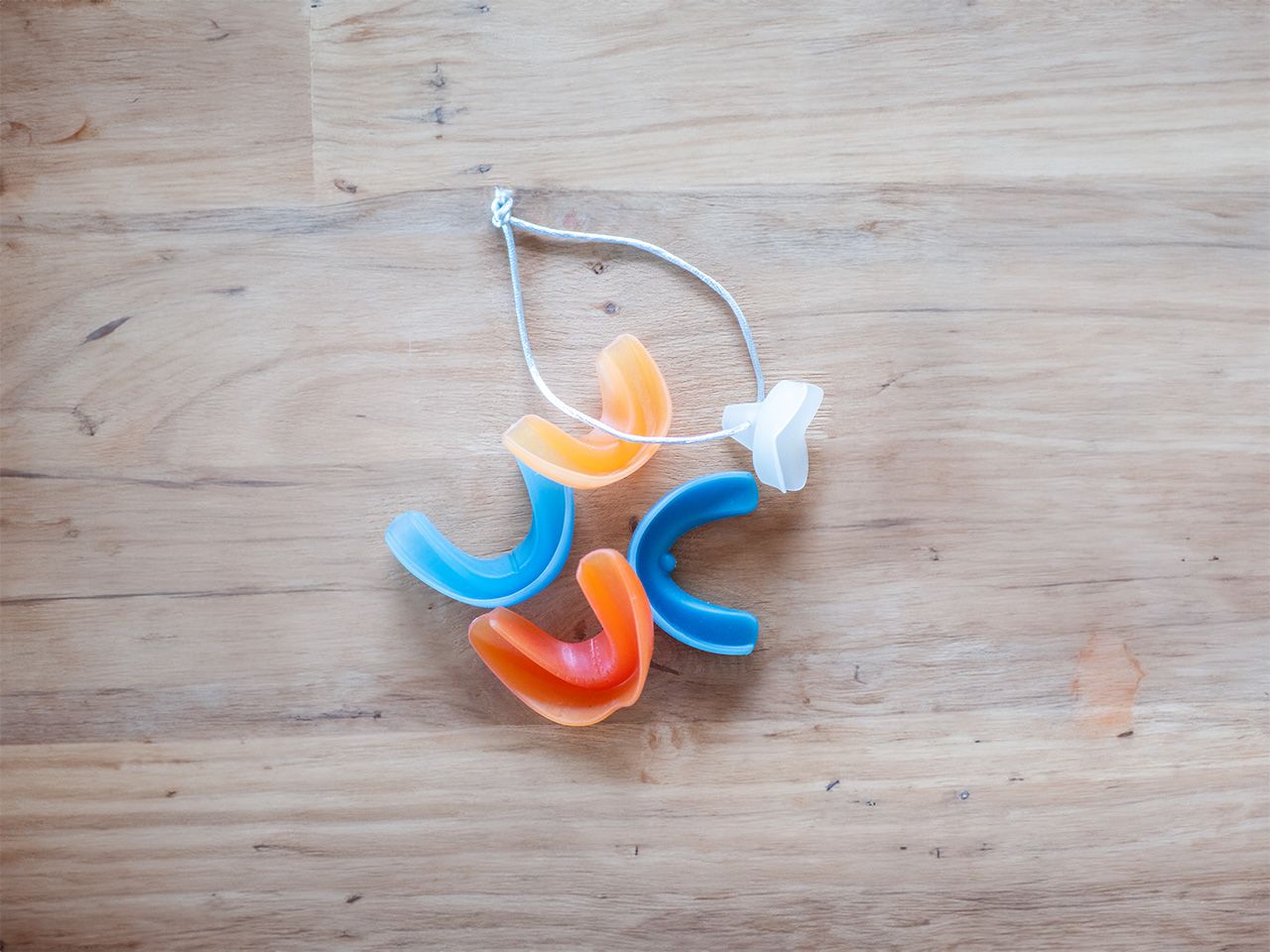
Conventional treatment often relies on occlusal splints to relieve symptoms. The functional approach of dentosophy adds to this view the question of why functional imbalances might exist.
Functional dentistry considers:
Breathing: Is nasal breathing unobstructed? Chronic mouth breathing can affect jaw function and muscle tension.
Tongue posture and swallowing pattern: Myofunctional exercises can help in regaining physiological patterns.
Body posture: Jaw position and overall statics influence each other. A holistic view can be revealing.
The approach aims to identify possible functional causes and to support the natural balance of the system.
Frequently asked questions about the jaw joint and headaches
Can headaches really come from the jaw joint? Yes, a connection is possible. The chewing musculature attaches to the skull and is neurologically connected to pain processing. Chronic tension in the chewing system can contribute to headaches.
What is the difference between a splint and functional therapy? An occlusal splint can provide short-term relief. Functional approaches such as dentosophy additionally consider breathing, tongue posture, and body posture in order to address possible causes.
When should I consider a functional evaluation? When headaches occur chronically, respond insufficiently to usual treatments, and accompanying symptoms such as jaw clicking, neck tension, or mouth breathing are present.
Conclusion
Chronic headaches can be connected to the jaw joint and the function of the chewing system. In the case of persistent complaints despite evaluation and treatment, functional diagnostics can provide additional clues and complement differential diagnoses.
A practitioner specialized in functional dentistry or dentosophy can clarify whether functional connections play a role in your case.
References
- Harari, D., Redlich, M., Miri, S., Hamud, T., & Gross, M. (2010). The effect of mouth breathing versus nasal breathing on dentofacial and craniofacial development in orthodontic patients. The Laryngoscope, 120(10), 2089–2093. [onlinelibrary.wiley.com/doi/...]
- Okeson, J.P. (2019). Management of Temporomandibular Disorders and Occlusion (8th ed.). Elsevier. ISBN: 978-0-323-58210-0. [Publisher](shop.elsevier.com/books/mana...)
- Rocabado, M. (1983). Arthrokinematics of the temporomandibular joint. Dental Clinics of North America, 27(3), 573–594. [PubMed](https://pubmed.ncbi.nlm.nih.gov/6578967/)
The content of this article is for general information and does not replace individual medical or dental advice. For questions about dentosophic approaches, a professional evaluation by an appropriately trained practitioner may be advisable.