

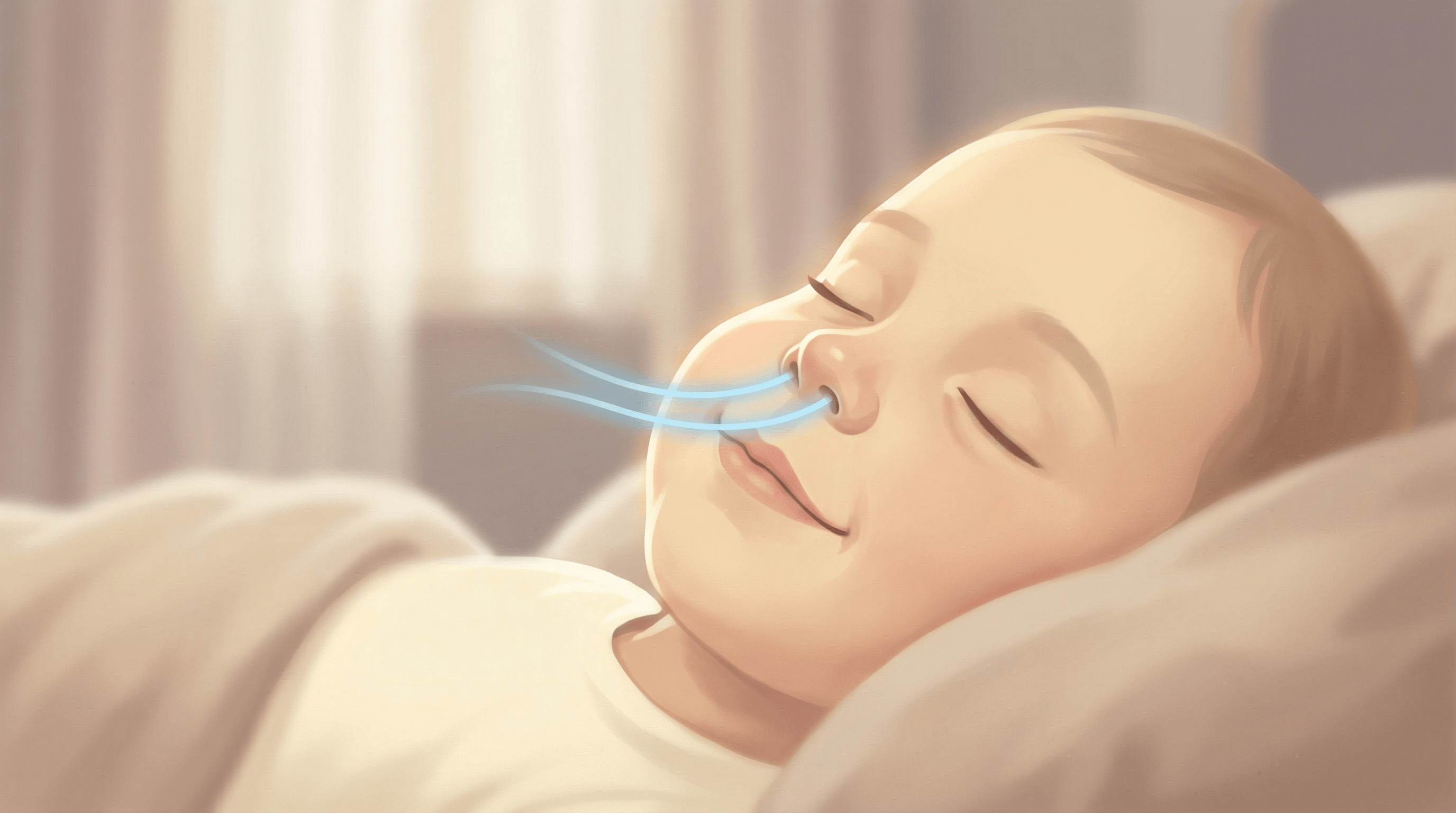
Nasal breathing in children affects more than air intake: it can shape the jaw, teeth, and sleep quality. Learn which steps toward evaluation may be worthwhile.
What to expect:
Does your child often keep their mouth open, snore at night, and the dentist has noticed a narrow jaw? This is not just a dental problem. Behind it lies a functional interplay of nasal breathing, tongue posture, and jaw growth.
In this article, you'll learn why nasal breathing is crucial for your child's overall development – and what you can do about it.
Why is nasal breathing so important?
Humans are anatomically built for nasal breathing. Mouth breathing is merely a backup program that the body should only use temporarily.
The nose performs important functions:
- Filters dust, pollen, bacteria, and viruses.
- Warms and humidifies the air for the bronchi and lungs.
- Produces nitric oxide (NO) in the paranasal sinuses – a gas that supports blood circulation and contributes to physiological breathing.
- Creates airflow resistance that trains lung function.
With chronic mouth breathing, these protective mechanisms are missing. Children then more frequently experience infections, sleep problems, and altered jaw shapes.
How does nasal breathing influence jaw growth?
The tongue is a powerful muscular complex. With proper nasal breathing, it rests broadly against the palate – with the tip just behind the upper front teeth. This gentle, constant pressure can promote the development of the upper jaw.
With mouth breathing, the opposite happens:
The tongue drops and rests in the lower jaw. The shaping stimulus on the palate is missing. Possible consequences:
- A narrow, high palate („gothic palate“)
- Crowding of the teeth, crossbite
- A narrowed nasal cavity (the upper jaw simultaneously forms the floor of the nose)
- A narrowed throat space – the basis for snoring
Especially in childhood, bone responds sensitively to functional stimuli. Nasal breathing and correct tongue posture can support harmonious growth.
Nasal breathing and sleep quality
With an open mouth, the tongue slides backward toward the throat at night. The tissue can collapse – leading to snoring or even breathing pauses (sleep apnea). If sleep apnea or pronounced daytime sleepiness is suspected, a medical evaluation (pediatrician/ENT) is required.
Consequences for children:
- Concentration problems and learning difficulties
- Daytime sleepiness or paradoxical hyperactivity
- Frequent nighttime waking
- Headaches
Important: Snoring in children is not harmless. It can indicate narrowed airways, enlarged adenoids, or jaw malformations. An evaluation by a pediatrician or ENT specialist is advisable.
Possible approaches for restricted nasal breathing.
If your child breathes predominantly through the mouth, there are several approaches:
1. Have the causes evaluated Enlarged adenoids, allergies, or anatomical obstructions should be examined by an ENT specialist.
2. Myofunctional therapy Targeted training of the tongue, lips, and cheeks can normalize the swallowing pattern and improve tongue posture.
3. Functional dentistry Specialized treatment approaches can provide functional stimuli that support jaw growth.
Frequently asked questions about nasal breathing
Why does my child breathe through the mouth? Common causes are enlarged adenoids, allergies, a chronically blocked nose, or an already altered jaw structure that makes nasal breathing difficult.
Can nasal breathing be trained? Yes. Myofunctional therapy specifically trains the tongue and lip muscles. Consciously practicing nasal breathing in everyday life can also help.
At what age should one take action? The earlier, the better. In childhood, the bone is still malleable. Ideally, an evaluation should take place as soon as mouth breathing, snoring, or dental crowding becomes noticeable.
Can the jaw still change? In children and adolescents, yes – facial growth is especially active until puberty. In adults the options are more limited, but functional adaptations are still possible.
Conclusion
Nasal breathing is more than „just getting air.“ It influences jaw growth, tooth alignment, sleep quality, and your child's overall development. Mouth breathing is a warning sign that should be taken seriously.
Early recognition along with targeted functional evaluation and support can be worthwhile.
The content of this article is for general information and does not replace individual medical or dental advice. For questions about dentosophic approaches, a professional evaluation by an appropriately trained practitioner may be advisable.